
Farm to Faucet (farce?) Clean Water Iowa Plan
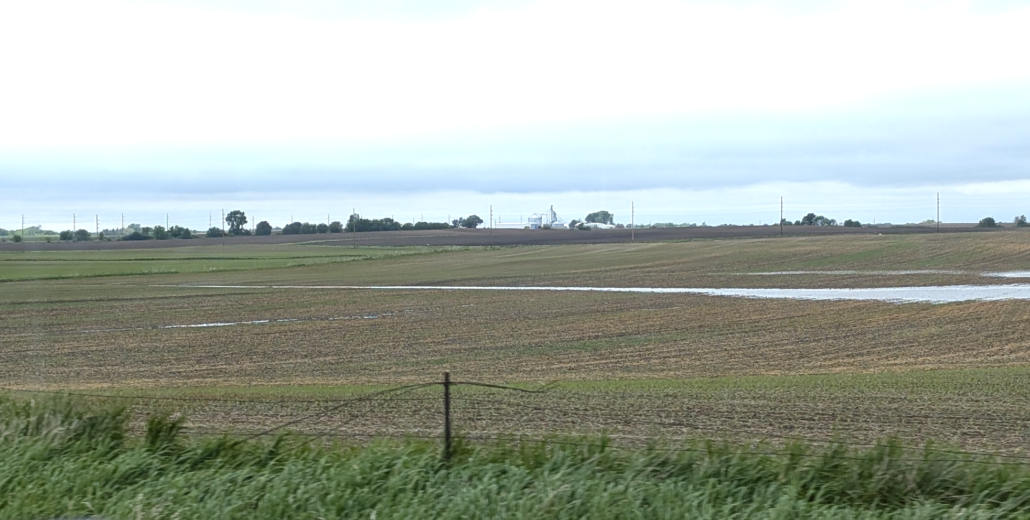
Spring has sprung in the Midwest, and we’ve been on the receiving end of our yearly scheduled deluge of rains that help turn a brown world, hanging on from a long, cold winter, into a land of greenery. It’s something close to the heart of any born-and-raised Midwesterner; we trade the ice and snow for wind and rain, and we are happy for some respite before the sweltering heat of summer drives us back inside.
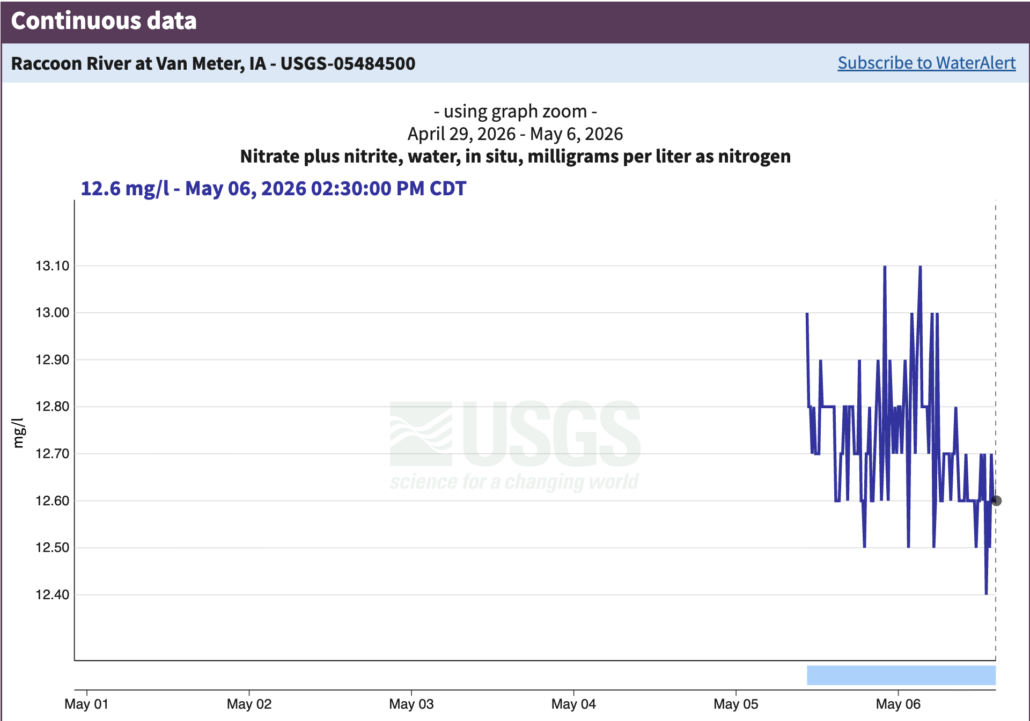
Of course, all this water brings with it other treasures from up North, in the form of nitrates and other such things being washed cleanly off those squares of black gold that make up our landscape. Field tiles spew a never-ending stream of dirt into ditches and streams, eventually joining with thousands of others, making the long journey south along our major waterways.
This was the hot topic last year, but quickly forgotten amid a world full of wars and rumors of wars.
The water in the Great Des Moines area, today, is just as dirty and filled with our collective sins as it has ever been.
Lo, a voice cried out.
Here I was, enjoying my wonderful spring, wandering the cold streets of Pella and enjoying those tulips before the crowds of camera-bearing bombers descended like a swarm of locusts. Then I happened to hear the voice of one crying out, bringing tidings of great joy, tidings that dragged up from the depths of my murky memory the kerfuffle of last year’s Water Quality Crisis.
How fickle we truly are.
One moment, we are in revolt like our tea-dumping forefathers, when our government demands we not water our lawns, thereby infringing on our God-given freedoms to have a better lawn than our neighbors; the next, we have moved onto the next headline news cycle and gleefully chug our tainted water with relish.
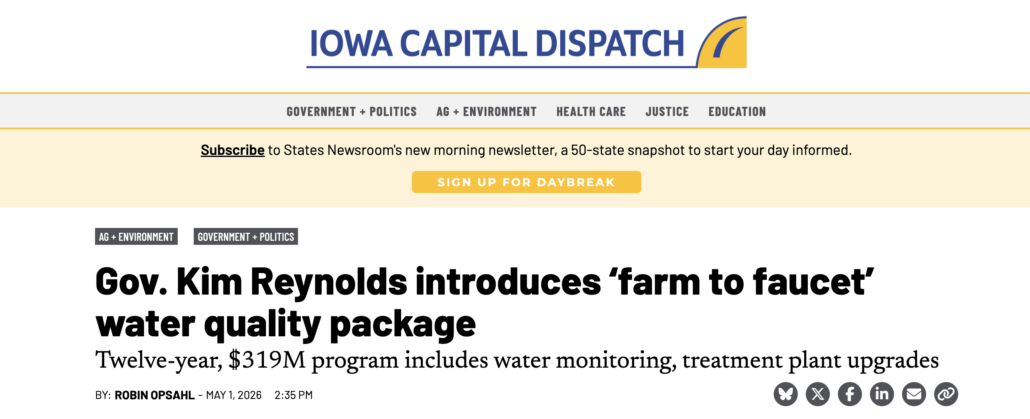
I’m not sure if I should be happy or mad about the Farm to Faucet that was recently announced. So uncharacteristic of the powers that be, in this state, controlled by Big Ag, that for decades has slowly and steadily ignored the growing water quality crisis, could this indeed be the turning point? Or maybe it’s just enough biscuit and bandaid to charm the fickle crowds for the next election cycle.
I held my breath in anticipation, then started reading the bill itself. Within the first two paragraphs, my heart sank.
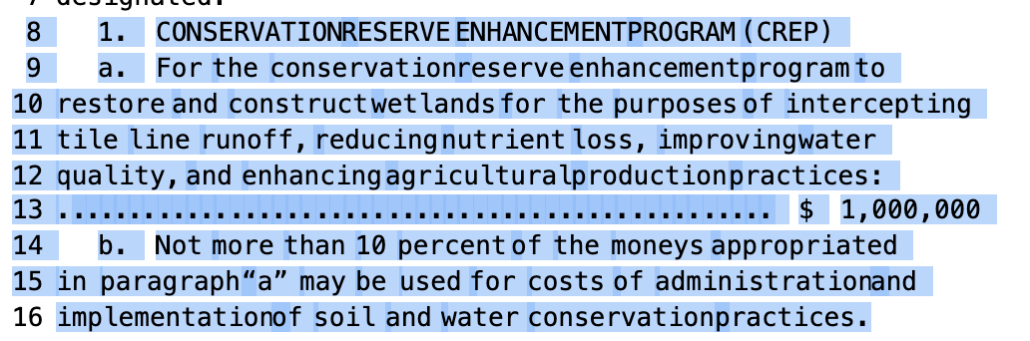
So, a wonderful one million dollars to address the core of the problem? That’s about enough money to run a few dozers’ worth of diesel across about 5 farms, plus some grass seed.
This does beg the question, where is all the money going then? Well, the Iowa Department of Agriculture website explains it well.
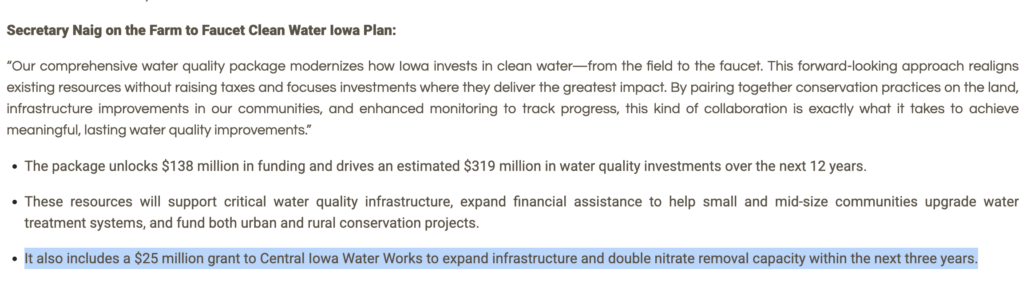 I mean, why wouldn’t we try to double our nitrate removal capacity? We don’t want a repeat of summer 2025, when the sprawling, lawn-watering beige backwaters of endless suburbanites were collecting their pitchforks and torches, plotting revenge for their dead and dying grass.
Probably the best way to figure out the “why” and “what does it mean” of any government tomfoolery is to give the old smell test. We’ve had volunteer programs for education and outreach as related to soil and water conservation in Iowa for decades. Has it done anything to ebb the dirty brown tide of water and chemicals that year after year flood our state? Of course not. Clearly, in 2025, the problem had become too big to ignore, setting off alarm bells in the minds of slippery politicians.
If that were you, and you didn’t want more repeats of that fiasco, what would you do?
You wouldn’t have many options. Mandating better farming and conservation practices is simply out of the question and politically falling on your own sword. In the heart of the Midwest, land and property rights are seen as non-negotiable. The eminent domain rage surrounding the carbon pipeline has made that perfectly clear for both sides of the political aisle: Mess with property rights at your own hazard.
That leaves someone between a rock and a hard place. How do you fix clear societal and state-wide problems that are starting to become hot-button issues when you live in the middle of, and underneath, the heavy hand of the Farm Bureau lobby?
Easy, you pour money into infrastructure that will make the problem disappear.

