It is an interesting time to be alive in Iowa, a place known for its slow pace of life and laid back culture. It’s hard to understate what a hidden gem of the upper Midwest the once beautiful prairie state is, sandwiched between the mighty Mississippi and that lesser known Missouri River, Iowa has plenty of its own drama and troubles.

In the high intensity political country we live in, Iowa has not escaped that bitter culture war that seems to be engulfing us with violent outbursts. As a reader and admirer of history, American history in particular, and as someone who is very familiar with the mostly violent past of this great country; it comes no surprise to me that the even here at the heart of the bread belt hatred and rivalry has overtaken common human decency at last.

Read more

This is, of course, overstating the facts, but indeed it is, at least for the hopeful few, a possible harbinger of a small respite that is in order for the once sea of prairie that is not corn that covers the landscape of Iowa. Indeed, the news has been bleak for John Deere (especially their employees) over the last few years, with things continuing to heat up.

TDLR:

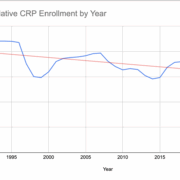
As Deere suffers and the agriculture economy as a whole, across Iowa, contracts, it is possible the land may get a small, brief, respite from the continual environmental flogging it recieves. How so? The weak farm economy might spur an increase in CRP, row crop acres dropping generally, less chemicals and fertilizers being dumped (opps, I mean sprayed).

Read more

“While the political parties rage and tear each other to pieces, and the multi-billion-dollar agriculture corporations turn a handsome profit, Iowa citizens pay a terrible price with every drop of water consumed.”

Sometimes I feel as if I’m living in a strange cross between some Orwellian future, and 1984. The rains in Iowa have been pounding steadily for months and the rivers have been running milky brown and over the banks the entire summer. In 2024, Iowa received a total of 36.95 inches of precipitation on average. 2025 has kept the pace going. “July 2025 ties 1897 as the 46th warmest and ranks as the 2nd wettest July in 153 years of statewide records.” – Iowa Ag.

This has come at a price, seemingly out of nowhere for most Iowans.

Read more

One of the best-kept secrets in the Midwest is the Lake Superior National Forest. Nestled in the tall pines of Northern Minnesota, close to that wondrous North Shore, the Lake Superior National Forest is home to wilderness and adventure unknown to most people who call the Midwest home.

Most who visit the far north keep to the North Shore, driving through Two Harbors, Lutsen, Grand Maris, and other beautiful lake shore towns that offer waterfalls, rock beaches, State Parks, and shopping. You can’t blame people, can you?

Read more

Doesn’t it feel good to say I told you so? I know we are supposed to outgrow that after middle school, but, you know, some things just can’t be helped.

As if out of the blue, like flying monkeys from the Wizards of Oz, the Des Moines public water works issued a statement and warning, followed up quickly by surrounding cities like Ankeny, about our drinking water sources being in danger.

In classic fashion, we have been chastised by the powers that be to stop watering our lawns for the greater common good. But, any normal person would stop short and ask … “Where did this come from?”

Read more

Who would have guessed? Not I. Bears in the prairies of Iowa? I suppose it’s not that big of a surprise for those astute readers of history. Many of the early settlers here in Iowa would mention the black bears that roamed the river and timber bottoms.

Read more

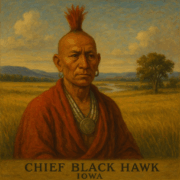
If you’ve lived in the Midwest any amount of time, you’ve probably heard the name Black Hawk in some context or other. There are counties named after him, a war named after him. To understand who Black Hawk is, who the people were, and why you hear that name around this Midwest, we have to rewind the clock a little.

Chief Black Hawk belonged to the Sauk Native American tribe, which was closely aligned with the Fox tribe, which is generally known as the Meskwakis. The tail of these tribes is sad and long, a long trail of tears that lasted a few hundred years. That context is essential for understanding Black Hawk and the war that ensued in the Midwest, which gave these people and their namesake, Black Hawk, their place in history.

Pre-1600, these tribes actually lived on the Atlantic coast of the East; for various reasons, including conflict with other tribes and settlers, they ended up around the Saginaw Bay area in Michigan. In the 1640’s with conflict arose and they were forced to move again, this time into Wisconsin.

The Sauk and Fox stayed in Wisconsin up until 1734, when both were forced from across across the Mississippi into what was know as the Iowa Territory at the time (Iowa was not a state at this time).

Even at this time there was a wall of early settlers living in Illinois and Wisconsin, some moving across (illegally into the Iowa Territory). These pioneers knew that their time was coming when they would be able to settle the Indian Territory (Iowa and beyond).

This was a tumultuous time for the Sauk and Fox, like many other tribes they were pushed and pulled around Illinois, Kansas, and modern day Iowa. This is also when they became more widely known, because of the Black Hawk War, and treaties.

“Pressures from white settlement after 1825 forced the Sauk along the Mississippi to leave western Illinois and relocate to southeast Iowa. The exception was Blackhawk’s Band at Rock Island (Illinois) which did not finally leave until after the Blackhawk War in 1832. As a result of the war, the Sauk surrendered a large part of eastern Iowa. The Fox and Sauk remained in Iowa until 1842. “

The Black Hawk War took place primarily in Illinois and Wisconsin and lasted from April to August 1832.

Background

  • In 1804, a disputed treaty led the U.S. to claim land in western Illinois and eastern Iowa that had long been occupied by the Sauk and Fox tribes.

  • Many Sauk, including Black Hawk, rejected the treaty, claiming it was signed without proper tribal consent.

What Triggered the War?

  • In 1832, Black Hawk led about 1,000 people (warriors and families) back across the Mississippi River into Illinois to reclaim ancestral lands — hoping to live there peacefully or possibly align with the British or other tribes.

  • U.S. settlers and officials viewed this as an invasion.

Conflict

  • The Illinois militia and U.S. Army pursued Black Hawk’s band, resulting in several skirmishes and massacres.

  • Native American resistance was largely unorganized compared to the U.S. forces.

  • Major engagements included the Battle of Stillman’s Run, the Wisconsin Heights, and the final Battle of Bad Axe, where most of Black Hawk’s followers were killed or captured.

Aftermath

  • Black Hawk was captured and imprisoned, later taken on a tour of Eastern U.S. cities before being released.

  • The war marked the end of Native armed resistance in the Old Northwest (modern-day Midwest).

  • It also reinforced the U.S. policy of Indian removal and opened large areas of the Midwest to white settlement.


The Black Hawk war… began over a misunderstanding… and ended in the death of around 1050 of his people following him. The Sauk tribe had lived in their village of Saukenuk near the mouth of the Rock River since the 18th century. When in 1804, William Henry Harrison negotiated a treaty with two representatives of the Sauk nation, he believed that the Sauk would surrender all lands east of the Mississippi for settlement.

What they didn’t understand was that chiefs of the Sauk nation in Illinois and Wisconsin believed the two tribesmen never had the authority to negotiate for the nation and therefore considered the treaty invalid and continued to occupy their village. Twenty-five years later lead mining was flourishing, the Sauk were being crowded out, but Keokuk and other chiefs felt it futile to resist.

In 1829 Keokuk and his tribe followed an order to move to the west side of the Mississippi in return for enough corn to survive the winter… but the government failed to deliver, leaving the tribe in a tough situation.

This is when Black Hawk, another Sauk chief led 1200 Sauk men, women and children back across the Mississippi to Illinois to re-occupy their village and grow corn for their families. In the end, what started as a misunderstanding… resulted in the final battle; the Battle of Bad Axe… where many Sauk lives were lost, and the remaining Sauk were reunited with the others in Iowa.

www.wisconsinhistory.org

It’s funny how we (humans) think we live in the age of enlightenment, have learned our hard lessons from our forefathers, and swear never to make the same mistakes again. But history would prove us otherwise. It seems like we learn something for a moment, but you know that old saying about history repeating itself.

I like to think there is something special about the time we are living in that causes these obvious mistakes to be made, but that’s not true. Money, power, Big Agriculture, corruption, and misused government bodies have wreaked havoc since Roman times. Here we are again today, in the Year of our Lord 2025, staring down the barrel of absolute destruction of our natural resources while the average person goes about their life without a clue. I’m not blaming them.

Read more

It’s hard to under emphasis the importance of Iowa’s Driftless region from both a historical and current ecological perspective. It feels like 3/4 of the state simply doesn’t know it exists, or has never taken the time to get to know it.

Yet it is the home, no the heart, of Iowa at its finest I would argue. Most of Iowa as we know it today has been plowed into oblivion, there is little left to recognize of what Iowa once was, or could be, is most of the State, save for the gentle rolling hills of corn that never ends. If you close your eye’s you might be able to envision the tall grass and beauty that once was this landscape.

Read more