
Only in Iowa. Make way for the corn.
The transition from fall to winter is a special and enjoyable time in Iowa. The first few snowstorms have come and gone, and those green monsters have gobbled up the endless plains of corn and soybeans. It’s quite a different world from the hot and steamy days of summer. The land lies bare, almost naked, stripped of its yellow gold that seems to drive the beating heart of the state.
I mean, if you don’t know any better, heck, those summertime rolling fields in the evening are what make Iowa … Iowa.
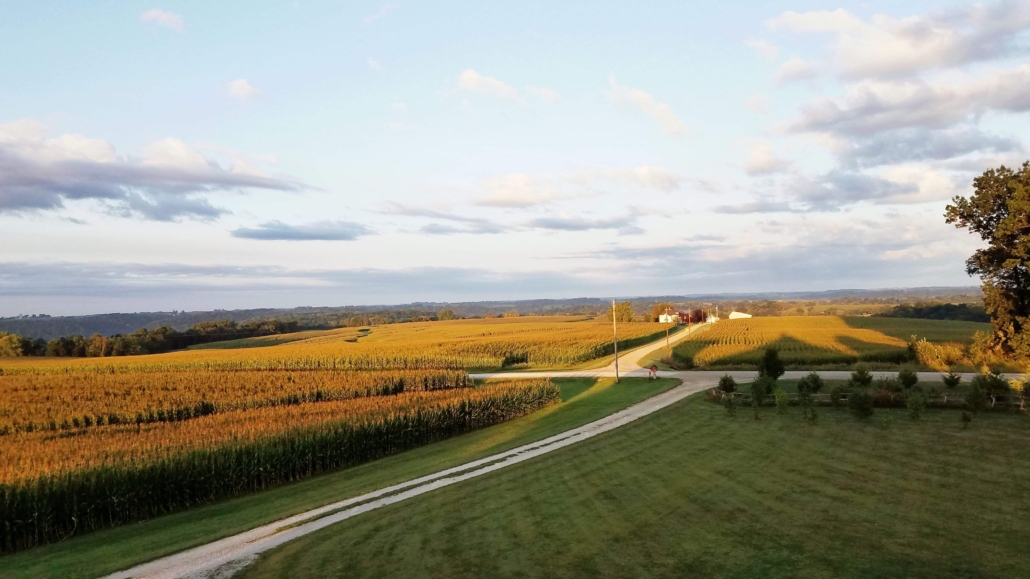
But those endless fields of central Iowa, unbroken for mile upon mile, do come with a darker side. Some of those dark sides have come to light in the rains of the summer, with the suburban lawn waterers only angry about the water quality as far as it affected their ability to keep up with the Joneses.
The maybe not-so-obvious side-effect of Iowa’s monoculture is the degradation of habitat for the animals that call this state home.
I mean, it’s very well known science that monoculture agriculture that dominates Iowa’s landscape has severe impacts on the ability of animals to maintain and thrive in good habitat … because that habitat ceases to exist.
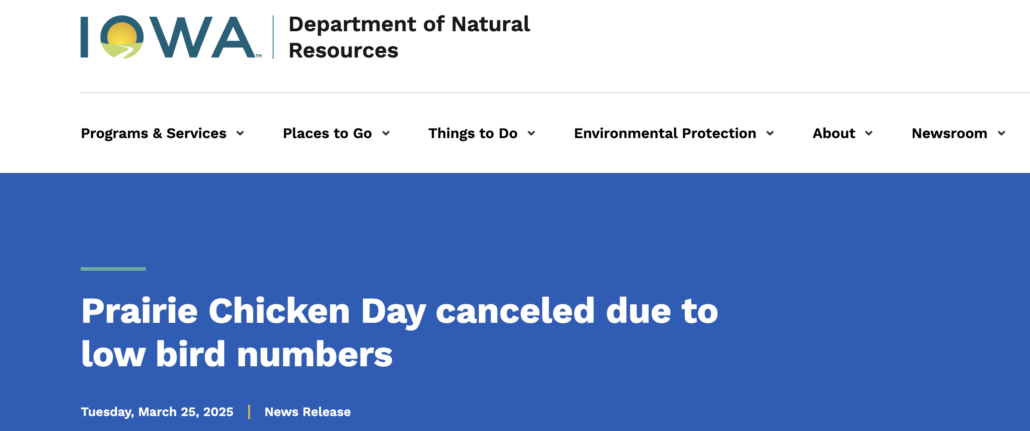
I mean, it’s gotten so bad that just this year, the Iowa DNR reported that the annual Prairie Chicken Day has now been canceled because the birds, of course, are no longer here, due to habitat loss.
I mean, the Iowa DNR itself admits that less than 0.1% of native habitat remains in Iowa. Anyone who has grown up in Iowa over the last few decades has seen the absolute desolation of wildlife habitat across the state, replaced by corn fields. Where there were once large and wide tree lines marking every square mile boundary of land, a veritable Sherwood forest for every kind of creature … hawks, rabbits, raccoons, pheasants, quail, squirrels, foxes, etc; those are all long gone, never to return.
Of course, with that disappearing habitat, the wildlife has gone as well. It’s not hard to imagine why animals have a hard time making it in hundreds of miles of corn with barely an oak tree in sight.
I mean, Iowans who spend any serious time in the outdoors, what’s left of them, are under no illusion about how hard the Iowa DNR is working to maintain quality land and water. Always hand-waving and excuses, zero accountability.
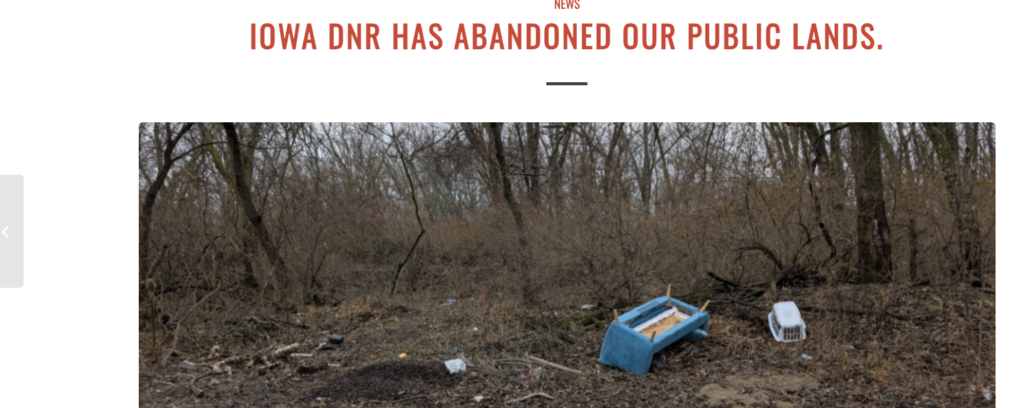
Today, as I was driving along that much-ignored Big Creek State Park, better known for its trash-lined shorelines, fish kills, and bathrooms shut down for decades (but don’t worry, they have Ram Heavy Duty 3500 dually trucks to drive around) … I came across a first-class example of the hard work of the Iowa DNR to improve natural habitat.
I wish I were making it up, but if you drive north out of Polk City, you can see it for yourself.
That once great Big Creek State Park, a bastion of wildlife habitat in the center of the state, I’ve spent my fair share of time tromping around the public land that surrounds that lake. Home to lovely, broad stripes of old stands of trees of all sorts, full of thick underbrush. In the snow, you would see endless tracks of birds, rabbits, deer, foxes, and every other kind of animal you could think of.
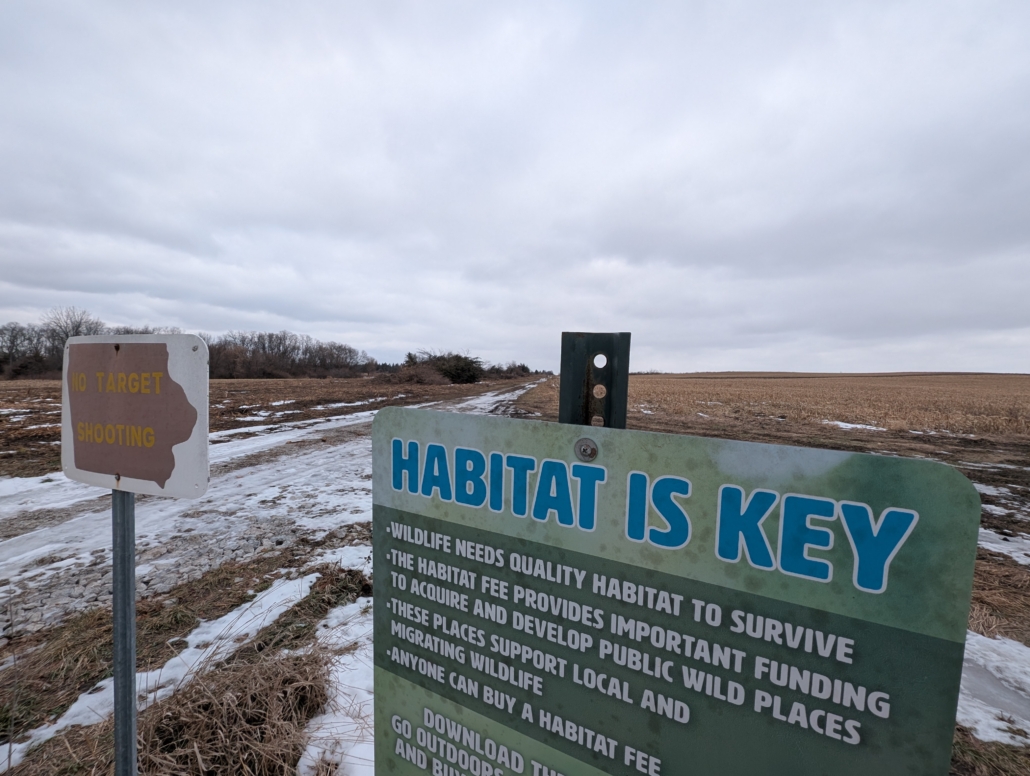
Like the Iowa DNR says in this wonderfully placed sign, “Habitat Is Key.”
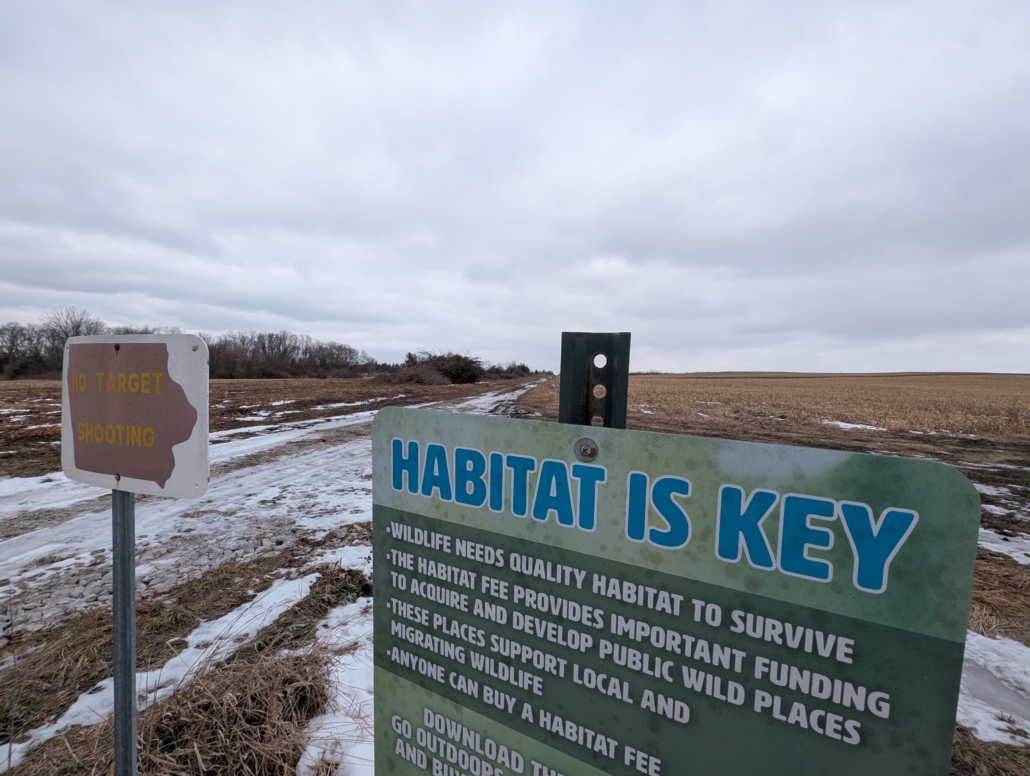
Until that corn ground is needed.
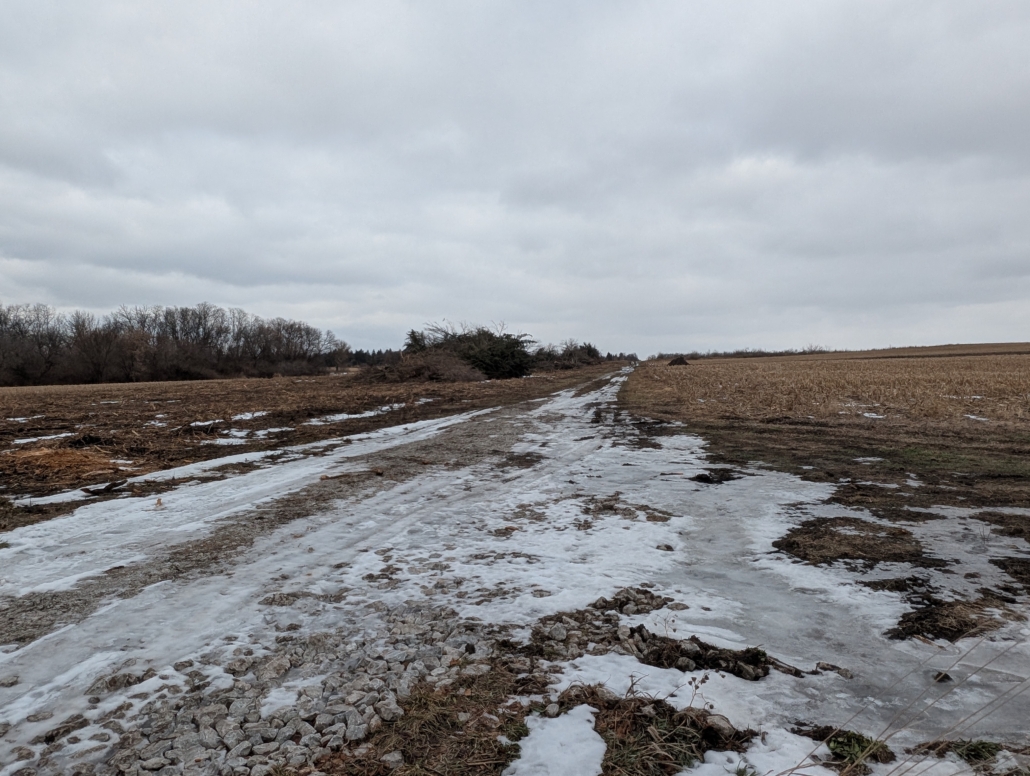
Then it’s time to bring the bulldozers. Sixty years of tree growth and habitat, gone in a single push.
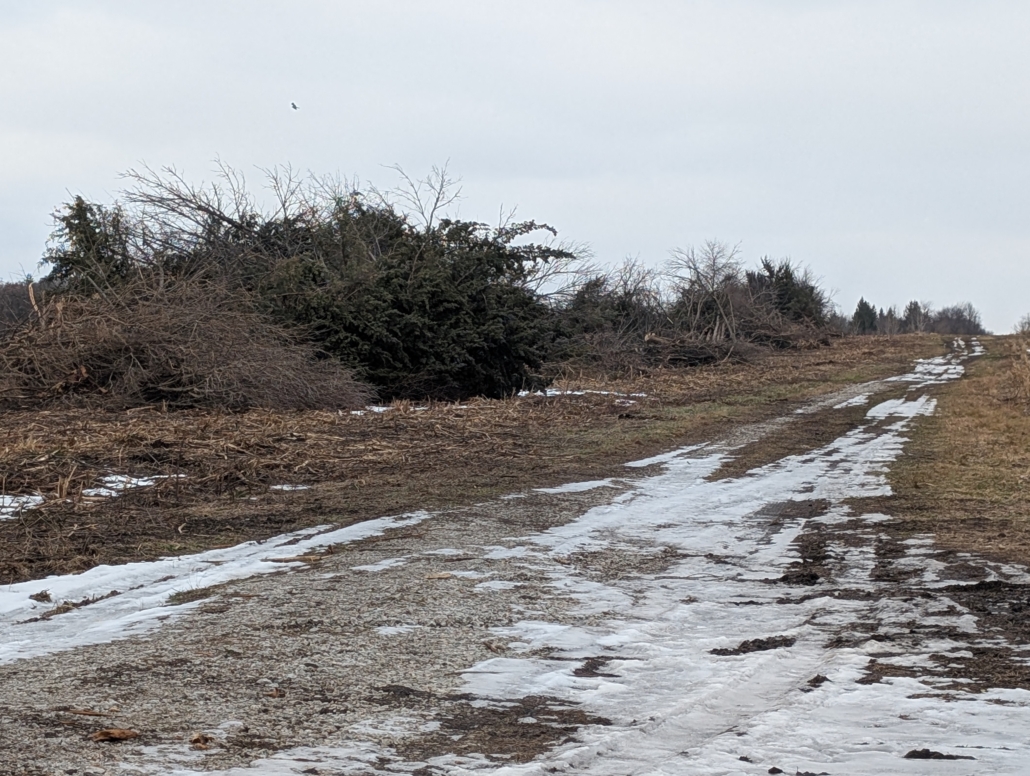
One would have thought, after all that talk of 25-year habitat plans and the like, that maybe, just maybe, they could have pulled that “Habitat is Key” sign and thrown it in the trash before they rolled the bulldozers in for those beautiful treelines. But after the summer of fun we’ve had, I guess we shouldn’t really be that surprised after all.
Just another day in Iowa.


Did you inquire with the DNR about these practices ? I’m thinking you didn’t. For if you did you might know that the DNR has long term goals of what public areas should look like.
One, most trees are not native to Iowa, we are a tall grass prairie state. Around here they leave the stands of burr oak and walnut while removing the invasive mulberry, ash and box elder. I imagine that is what you saw. Native grasses and wild flowers should be there, not trees.
Second, the planting of row crops on state owned land is done prior to prairie restoration to rid the land of the invasive brome, thistles and such. After a few years of clean cropping native seedings are done and have less completion from invasive species.
The DNR works on a longer time scale than what we might like to see, these areas will look like crap for a few years but our grandchildren will hopefully see a landscape that is representative of the native environment that was here before us.
I encourage you to visit with the local DNR folks instead of condemning them without knowledge of what is being done.